There’s a quiet line in Scripture that many read… but few notice:
“By faith Enoch was taken up so that he should not see death…”
— Hebrews 11:5
It doesn’t say Enoch was a prophet.
It doesn’t list his miracles.
It simply says he was taken — so that he wouldn’t see death.
And right there, in that short phrase, a whisper unfolds — one that may help us understand something deeper about the Rapture, the Two Witnesses, and the kind of faith God honors before judgment comes.
This scroll is not written to declare certainty.
It’s written to trace the patterns that God has already laid out in His Word —
and to humbly consider why Enoch may not be one of the Two Witnesses,
but instead, a prophetic picture of what will happen to the Bride of Christ —
those who walk with God by faith and are taken before judgment falls.
How This Revelation Unfolded: A Whisper in Jude
I hadn’t planned to study the Two Witnesses that day.
I was actually headed toward the Book of Revelation — ready to reflect and dig deeper. But something unexpected happened. My attention landed on the small, often overlooked letter of Jude.
And then I saw it:
“Michael the archangel, when he disputed with the devil and argued about the body of Moses…”
— Jude 1:9
Why would angels fight over a body?
Why would Satan care about someone already buried — unless that body still had purpose?
That moment flipped everything.
For a long time, I had assumed the Two Witnesses in Revelation 11 would be Enoch and Elijah — after all, they never died. That seemed logical.
But then Hebrews 11:5 came back to mind — a verse I had read many times, but never paused to truly consider:
“By faith Enoch was taken up so that he should not see death.”
Suddenly, I saw it clearly:
Enoch didn’t just skip death — he was removed for the express purpose of avoiding it.
That means his role is sealed. He’s not coming back to die later — because that would contradict the very reason he was taken.
Enoch: Taken Before Judgment
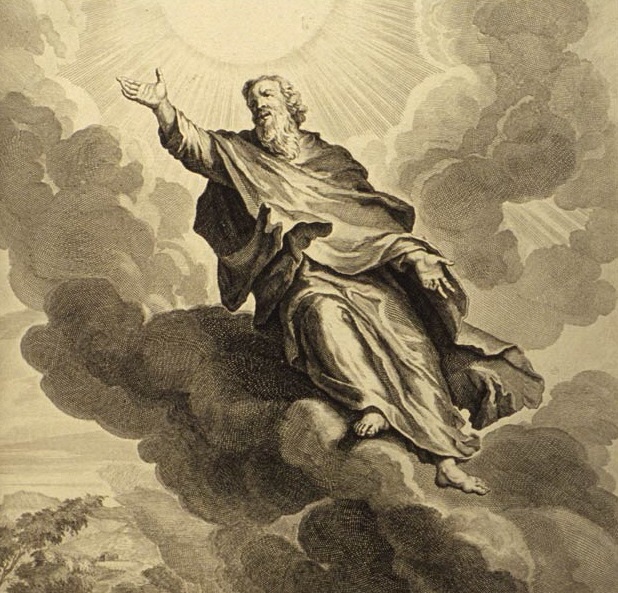
“Enoch walked with God, and he was not, for God took him.”
— Genesis 5:24
“By faith Enoch was taken up so that he should not see death…”
— Hebrews 11:5
Enoch lived in the days before the flood — a world filled with violence and corruption.
Yet in the middle of it, he walked with God. He wasn’t building an ark or calling down plagues — he was simply faithful.
And God took him.
Not because he was perfect. But because his faith pleased the Lord.
This removal — before the flood — paints a prophetic pattern:
- Noah was preserved through judgment.
- Enoch was taken before it.
In this, Enoch becomes an early shadow of the Rapture —
a picture of those who walk with God by faith and are removed before wrath is poured out.
Why Enoch Cannot Be One of the Two Witnesses
Many have assumed the Two Witnesses would be Enoch and Elijah, simply because they never died. But Hebrews 11:5 gives us the key:
“By faith Enoch was taken up so that he should not see death.”
This isn’t a coincidence — it’s a divine appointment.
Enoch’s entire removal was based on not seeing death.
But in Revelation 11, the Two Witnesses must die:
- The Beast will kill them.
- Their bodies will lie in the streets of Jerusalem.
- The world will celebrate their death.
- And they will rise again after 3½ days.
To send Enoch back just to kill him would not only break his prophetic role — it would undo the promise tied to his faith.
Moses and Elijah: Preserved for Return
If Enoch is not one of the Two Witnesses, then who is?
The answer points us toward Moses and Elijah — the two men who appeared with Jesus at the Mount of Transfiguration, representing the Law and the Prophets.
Why Elijah?
- Taken up without death (2 Kings 2:11)
- Prophesied to return (Malachi 4:5)
- Performed miracles parallel to the Revelation 11 description — shutting up the heavens, calling down fire
Why Moses?
- He died — but was buried by God Himself (Deut. 34:5–6)
- No one knows the location of his body
- Satan fought over that body (Jude 1:9) — indicating God was not finished with it
- Appeared bodily at the Transfiguration (Matthew 17)
- His Revelation 11 counterpart performs Moses-like plagues: turning water to blood, striking the earth
But Didn’t Moses Resurrect with Christ?
Some believe Moses was among the “saints” raised after Jesus’s resurrection (Matthew 27:52–53).
But Scripture never names him.
And if Moses had been glorified at that time, he could never die again —
Romans 6:9 says:
“Christ, being raised from the dead, will never die again; death no longer has dominion over him.”
The same applies to any glorified saint.
This leads us to a more likely conclusion:
Moses’s body was preserved by God — not glorified.
He may appear again not in a resurrected body, but in a preserved one — ready to fulfill a mission still appointed: to testify, die once more, and then rise with the righteous.
The Bride and the Final Pattern
Enoch didn’t escape death because he was special.
He escaped because his faith pleased God.
“Without faith it is impossible to please Him…”
— Hebrews 11:6
This is the same kind of faith the Bride of Christ is called to:
- Not faith in comfort
- Not faith in outcomes
- But faith in God’s voice — even when the world mocks
Enoch walked faithfully in a time of rebellion.
And before judgment came, God removed him.
That is the prophetic picture of the Bride:
A people walking closely with God, taken not by might — but by faith.
The Divine Appointment — Death, Resurrection, and Faith
Every person is appointed to die once — unless God chooses to make an exception by faith.
- Enoch: Removed before death, forever sealed.
- Elijah: Taken, expected to return.
- Moses: Died, buried, preserved — likely to return and die once more.
The Two Witnesses in Revelation 11 are appointed to die.
They will preach, perform signs, confront the Beast, and be killed publicly.
Then they will rise.
That is not Enoch’s path.
That is the path of Moses and Elijah — the Law and the Prophets testifying one final time before the end.
A Personal Note: I Always Wondered About Enoch
Since I was young, I’ve always wondered why Enoch was taken.
What did he do to make God love him so much that He took him without death?
Whenever someone asked, “Who do you want to meet in heaven first?”
I always said, Enoch. I had so many questions.
And now, I believe part of the answer has come:
Enoch’s story isn’t just about being taken — it’s about how faith moves the heart of God.
It’s about the kind of faith that walks so closely with Him that death has no power.
It’s about what the Bride of Christ is called to be — awake, faithful, ready.
And yes, in Enoch, God’s love is revealed again — not just to him,
but to all of us who choose to walk by faith, not fear.
Final Note for Readers
This post is based entirely on what is written in Scripture, with all interpretations submitted to the Word of God.
While many scholars have debated the identity of the Two Witnesses, the connection between Enoch’s faith and his exemption from death (Hebrews 11:5) is not widely emphasized — yet it may hold the key to understanding why he is not among them.
I do not claim certainty — only reverence.
And Arete Gune invite every reader to test all things by the Word.
 Arete Gune: The Name on the White Stone
Leave a comment